Oral History / Histoire orale
The history of the Chelsea Adult Hockey League is still being pieced together from the memories of the people who built it. What follows is a first public-facing draft of that story, based on recollections from early captains, organizers, and long-time players. As more players contribute photos, names, dates, and stories, this section will continue to grow. / L’histoire de la CAHL est encore en train d’être reconstituée à partir des souvenirs des personnes qui l’ont bâtie. Ce qui suit constitue une première version publique de ce récit, fondée sur les souvenirs d’anciens capitaines, d’organisateurs, et de joueurs de longue date. À mesure que d’autres joueurs partageront des photos, des noms, des dates, et des anecdotes, cette section continuera de s’étoffer.
De la CAPH à la CAHL
Avant que la ligue ne prenne sa forme actuelle, des organisateurs locaux travaillaient déjà à obtenir du temps de glace à Chelsea. John Rollings se souvient que, avant l’ouverture du Meredith Centre en juillet 2012, Sam Seymour, Richard Post, et lui ont rencontré l’administration de l’aréna pour aider à établir le contrat de glace qui soutient encore la ligue aujourd’hui.
Selon John, la ligue a commencé en septembre 2013 sous le nom de CAPH, pour Chelsea Adult Pickup Hockey. Nic Hinsperger et lui ont mis en commun leurs plages de glace du jeudi soir afin de former une ligue à quatre équipes. John avait la plage du jeudi à 21 h, et Nic celle de 23 h, ce qui permettait au groupe de faire tourner différentes combinaisons hebdomadaires avec Sam Seymour et de maintenir la ligue en activité.
John se souvient que les Larrimac Loggers faisaient partie des équipes originales, et que Dave McCulloch dirigeait Kingsmere Super Elite. Il se rappelle aussi que les Loggers ont remporté la première saison, alors connue sous le nom de coupe CAPH. Le premier tournoi-bénéfice de Noël a eu lieu le 30 décembre 2013.
D’après ses souvenirs, la CAPH n’a duré qu’une seule saison. En septembre 2014, Nic Hinsperger et lui ont signé leur propre contrat avec le Meredith Centre et ont changé le nom de la ligue pour CAHL, la Ligue adulte de hockey de Chelsea. La ligue est demeurée une compétition à quatre équipes jusqu’à la saison 2017–2018, moment où elle est passée à six équipes. Brad Stewart se rappelle lui aussi que Nic lui a demandé, vers 2014, de lancer une nouvelle équipe à mesure que la ligue prenait de l’ampleur. Parmi les premières équipes dont on se souvient à cette époque figurent les Loggers, Kingsmere Super Elite, et Tenaga Thunder. D’autres équipes, capitaines, et dates précises sont encore en cours de confirmation dans le cadre de ce projet d’archive.
Les Mineurs
Brad Stewart was the founding captain of what became Les Mineurs d'Old Chelsea. In the early years, Phil Waddington served as the team’s co-captain. After Phil stepped away, Bryn Jones took over that leadership role.
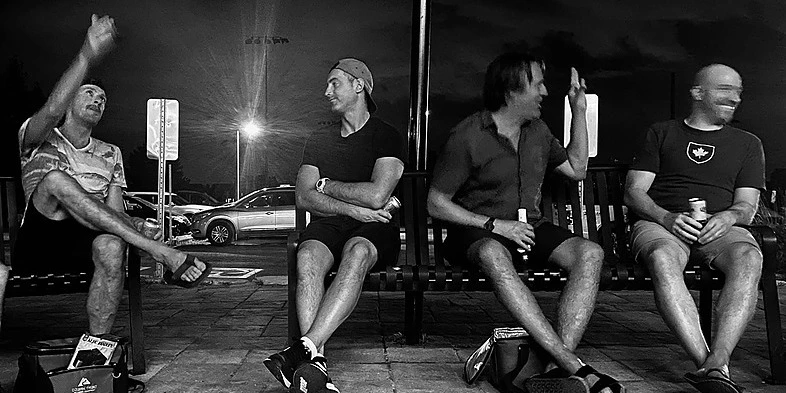
From left to right: Ryan Ralph, Bryn Jones, Hugues Théorêt, and Rob Simpson
One of the most memorable early Mineurs players was Tim Staniszewski, who played with the team in its first season and won the first Biggest Digger Award. In May 2020, while Tim was battling cancer, the award was sent to him. He passed away shortly afterward. Brad recalls that Tim’s daughter, Poppy, kept the trophy.
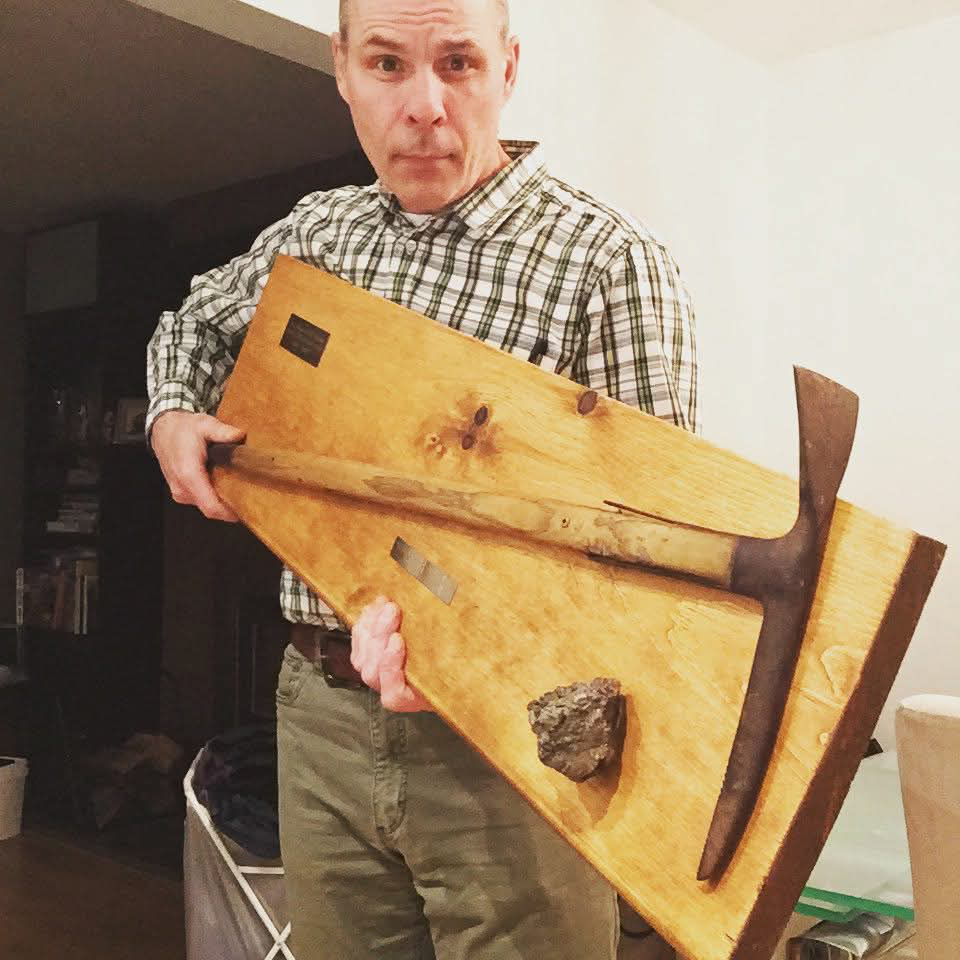
Tim Staniszewski with the first Biggest Digger Award, circa 2015: dig hard, dig your best, and dig some more!
A community league is about more than standings, scores, or championships. The relationships, memories, and small acts of remembrance often outlast the games themselves.
Une ligue aux équipes changeantes
L’une des particularités de la CAHL est que, à part les capitaines, les équipes changent d’une saison à l’autre. Plutôt que de conserver les mêmes alignements année après année, la ligue utilise un repêchage fondé sur des groupes de joueurs équilibrés. Des joueurs de calibre comparable sont placés dans des boîtes, et chaque équipe repêche un joueur dans chacune d’elles.
Ce format donne à la ligue un caractère différent de celui de plusieurs autres ligues récréatives. Les rivalités existent, mais il y a aussi beaucoup de mouvement. Avec le temps, plusieurs joueurs ont porté différents chandails tout en demeurant membres de la même communauté plus large.
La saison d’été fonctionne à plus petite échelle que la saison d’hiver, avec seulement quatre équipes participantes : les Loggers, Les Mineurs, Super Elite, et les Maulers.
History Bite
As this archive grows, it will also collect shorter recollections from players whose paths crossed several versions of the league. These small stories help show how often teams change, how players move from one group to another, and how a community league builds its history one season at a time.
It was a lot of work getting it going, plus money too. For that first season, we had to pay in advance, so I borrowed about $4,000 from my line of credit. I knew it would be a success.
History Bite
I joined the league and the Farm Point Pirates for the Winter 2018–2019 season, the year of the Pirates’ first, and to date only, championship. Over time, I also played with the Maulers and the Loggers before becoming a Kingsmere Super Elite captain in Winter 2022–2023, replacing Jerry Popovich, and winning the Summer 2022 championship with a stacked team. I broke my arm in league play in September 2023, which kept me out for a full season. I eventually returned to a captaincy with the Pirates for Winter 2025–2026. Unlike some of the friendlier leadership voices in the league, I chose to let my acerbic nature and lack of a sunny disposition do the talking in the changeroom. I can't say that it has led to much success on the ice, but the banter is fire!
A Broad Community
The CAHL has long brought together players from a wide variety of hockey backgrounds. Some never played organized hockey at all. Others came through higher levels of the game, including Junior B, Junior A, and even Olympic competition (for field hockey, but still...).
The same variety shows up off the ice. Over the years, the league has included an eclectic mix of people: journalists, politicians, professors, teachers, financial advisors, public servants, lobbyists, NGO directors, engineers, police officers, mechanics, retirees, doctors, arborists, musicians, entrepreneurs, social workers, IT specialists, plow drivers, woodworkers, lawyers, and many others.
The league has also produced its share of family connections, with parents, children, and siblings appearing on the ice together, or lining up against one another, across different seasons.
- the Dodds twins, Will and Pat
- the Flood family: father Bob, and sons Liam and Joe
- the Latour brothers, Richard and Jacques
- the other brothers Bryn and Danny Jones
- the Waddingtons: Phil (old) and Adam (young)
La vie autour de la patinoire
La ligue ne se distingue pas seulement par la diversité des professions et des parcours hockey de ses joueurs. Elle est aussi façonnée par la culture du vestiaire et par le village qui l’entoure.
On dit que les vestiaires se divisent assez également entre partisans des Sénateurs, des Canadiens, et des Maple Leafs, avec quelques amateurs des Canucks et des Devils ici et là (il faut peut-être se réjouir qu’aucune des équipes professionnelles locales n’ait gagné les grands honneurs depuis les débuts de la CAHL...).
Il en va de même pour la langue. La ligue vit depuis longtemps en anglais et en français, ce qui contribue à lui donner un caractère profondément ancré à Chelsea et dans les Collines de l'Outaouais.
Traditions
For all the talk of standings, drafts, and championships, much of the league’s identity lives in the rituals around the game: the conversations in the dressing room, the stories that survive from one season to the next, the team calls before puck drop, and the handshakes that close out a hard-fought game.
Some teams have also built their own pregame huddle traditions:
- Loggers: "Chop! Chop! Chop! Timber!"
- Mineurs: "1-2-3 DIG!"
- Pirates: "Pirates, skate FAST!! Pirates, change FAST!!"
- Super Elite: the huddle call rotates from player to player throughout the season
- Trailblazers: "Blazers on 3 ... 1!! 2!! 3!! BLAZERS!!"
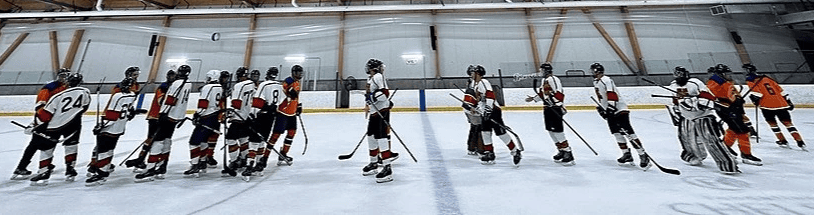
Handshake line between Les Mineurs and the Maulers
Those moments are easy to overlook when they occur, but they will be the ones we remember in time.
Chandails et capitaines
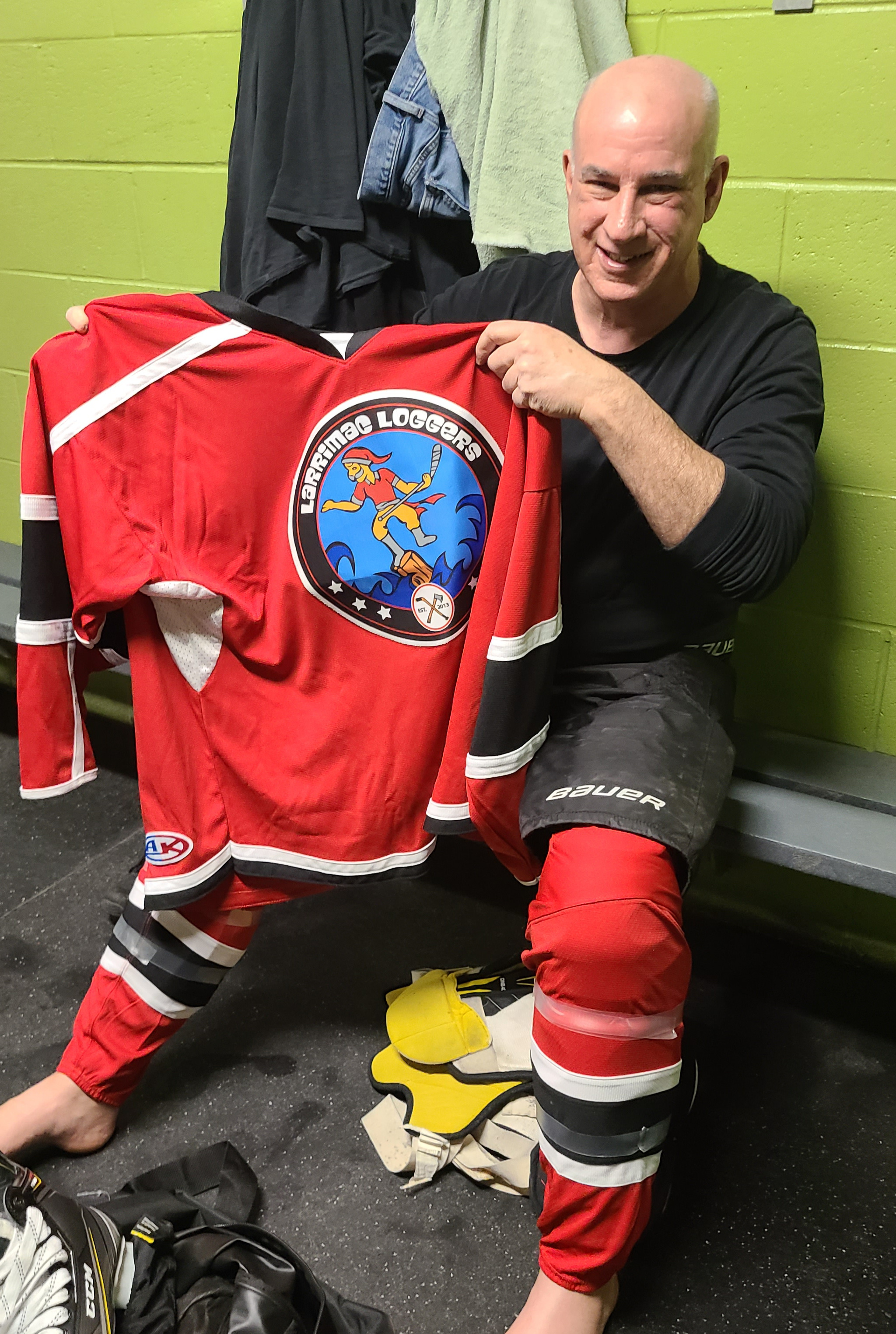
John Rollings avec le nouveau chandail des Loggers
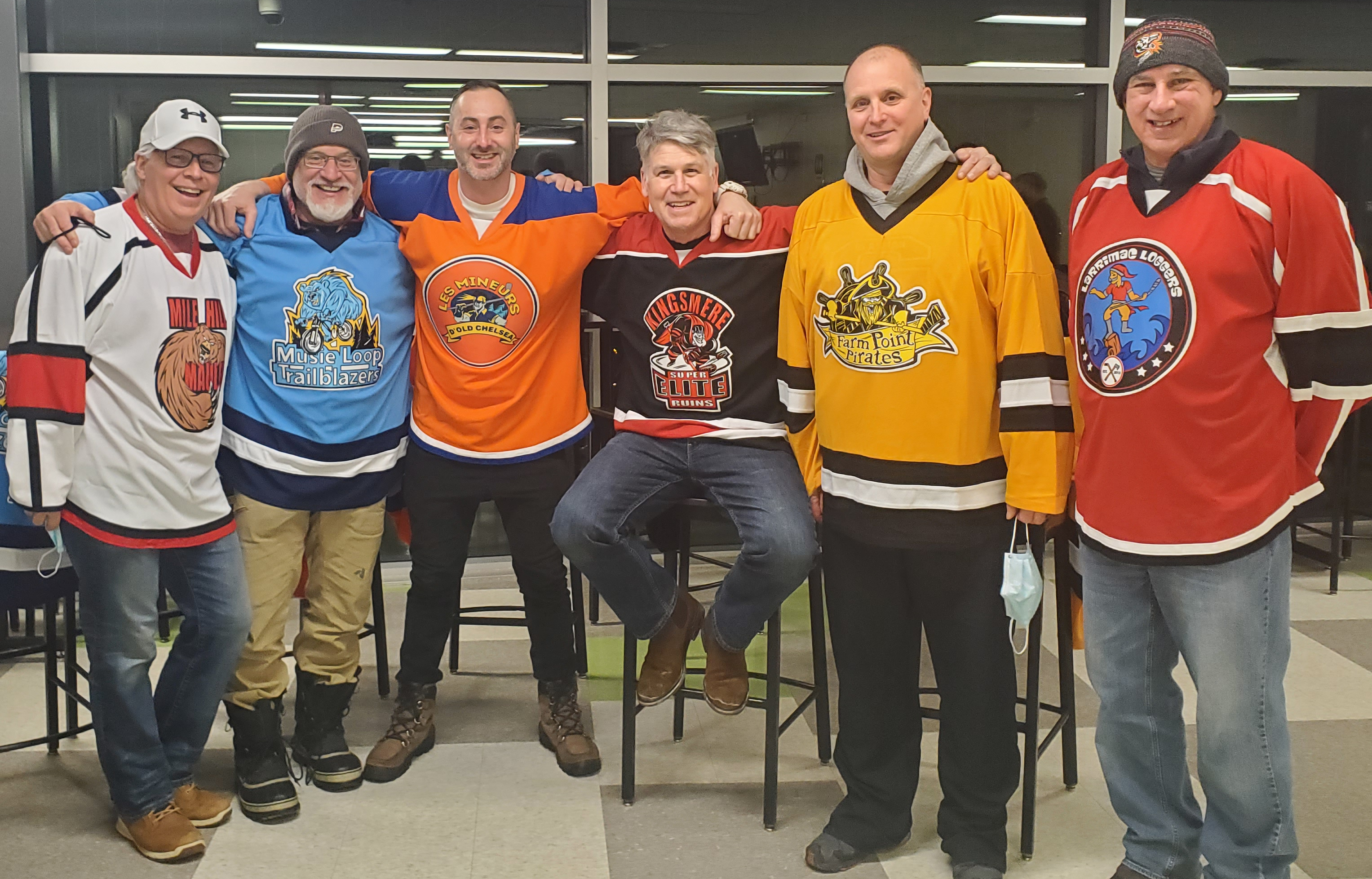
Les six nouveaux chandails commandés pour la ligue en 2022
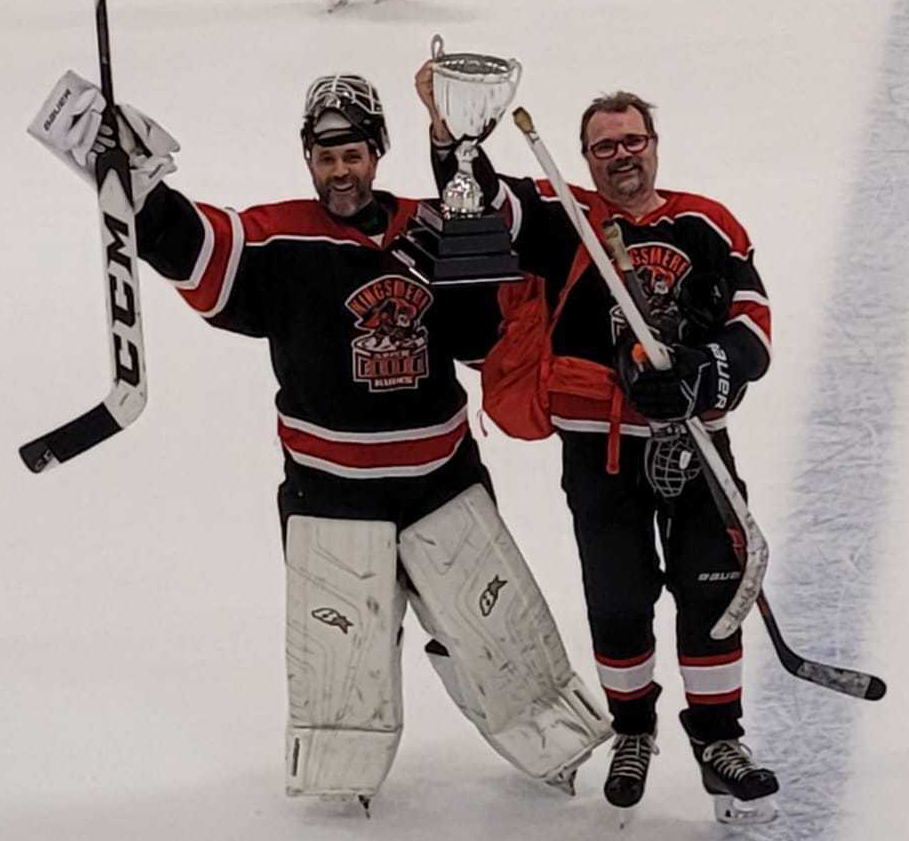
Joël-Denis Bellavance et Patrick Boily, avec coupe Lauzier et sac à dos (été 2022)
Cups and Trophies
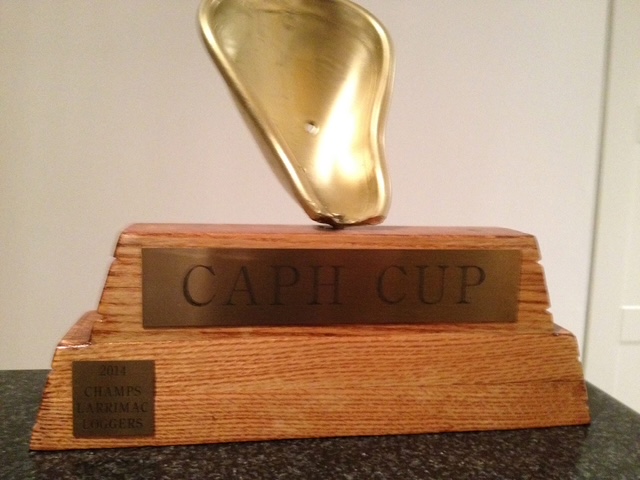
The old CAPH Cup
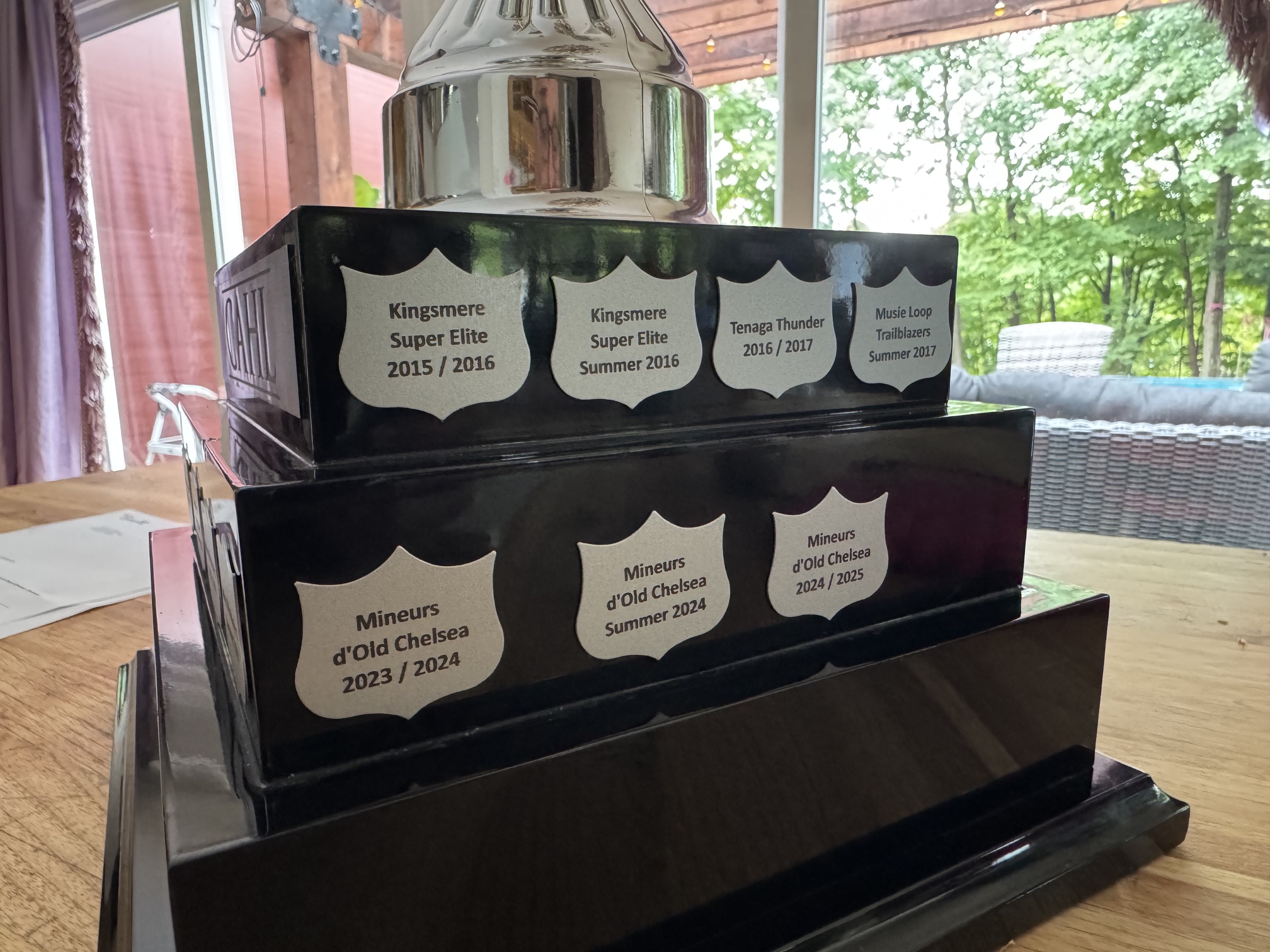
The new CAHL Cup, the Lauzier Cup
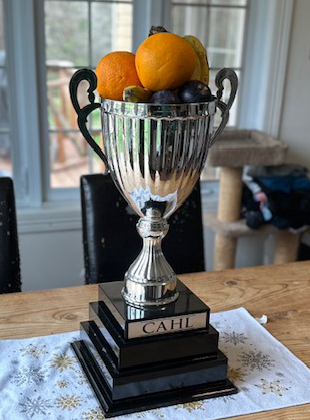
Another view of the Lauzier Cup
Instantanés de championnats
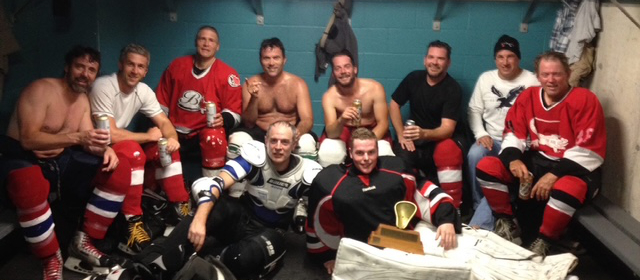
Champions de l’été 2015 : les Loggers
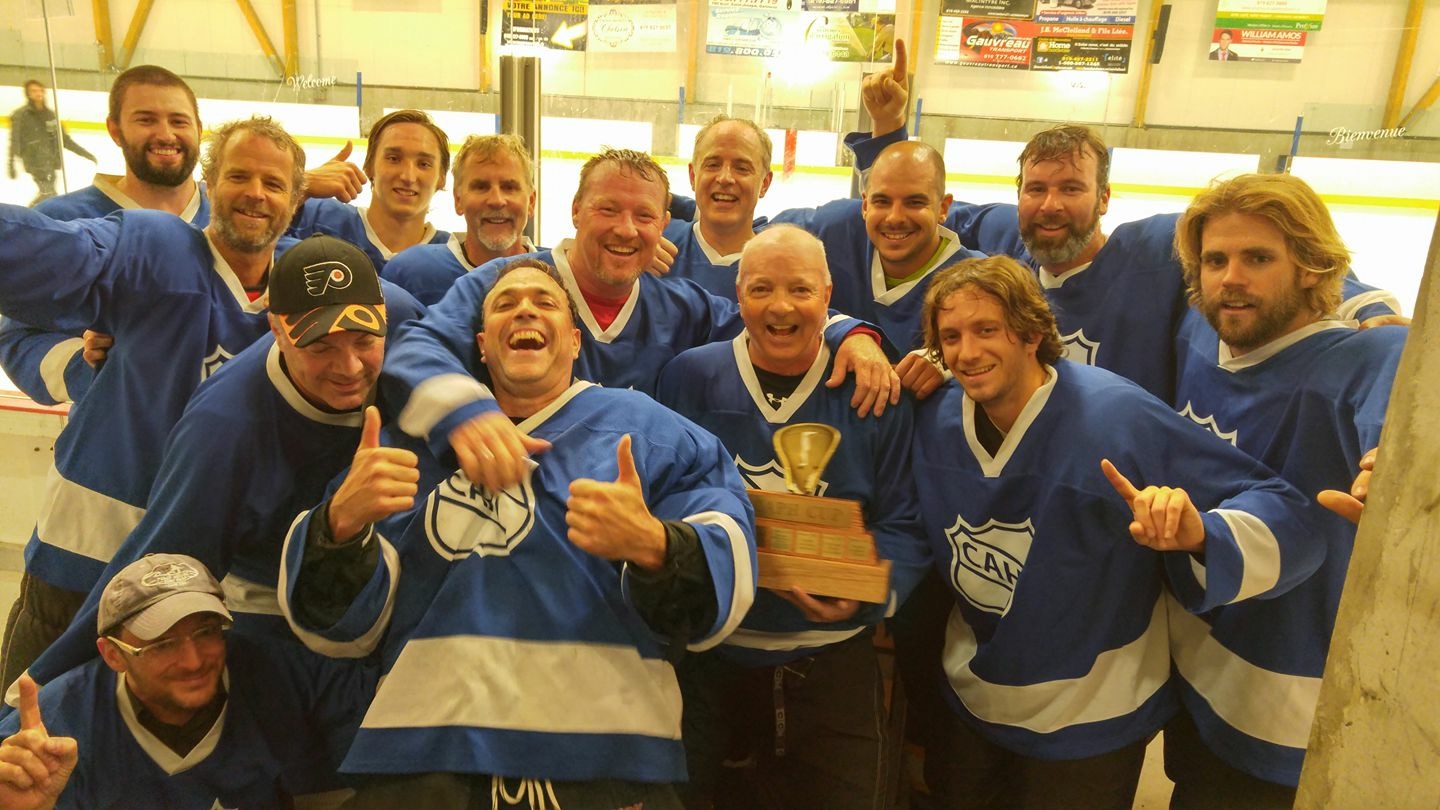
Champions de l’été 2017 : les Trailblazers
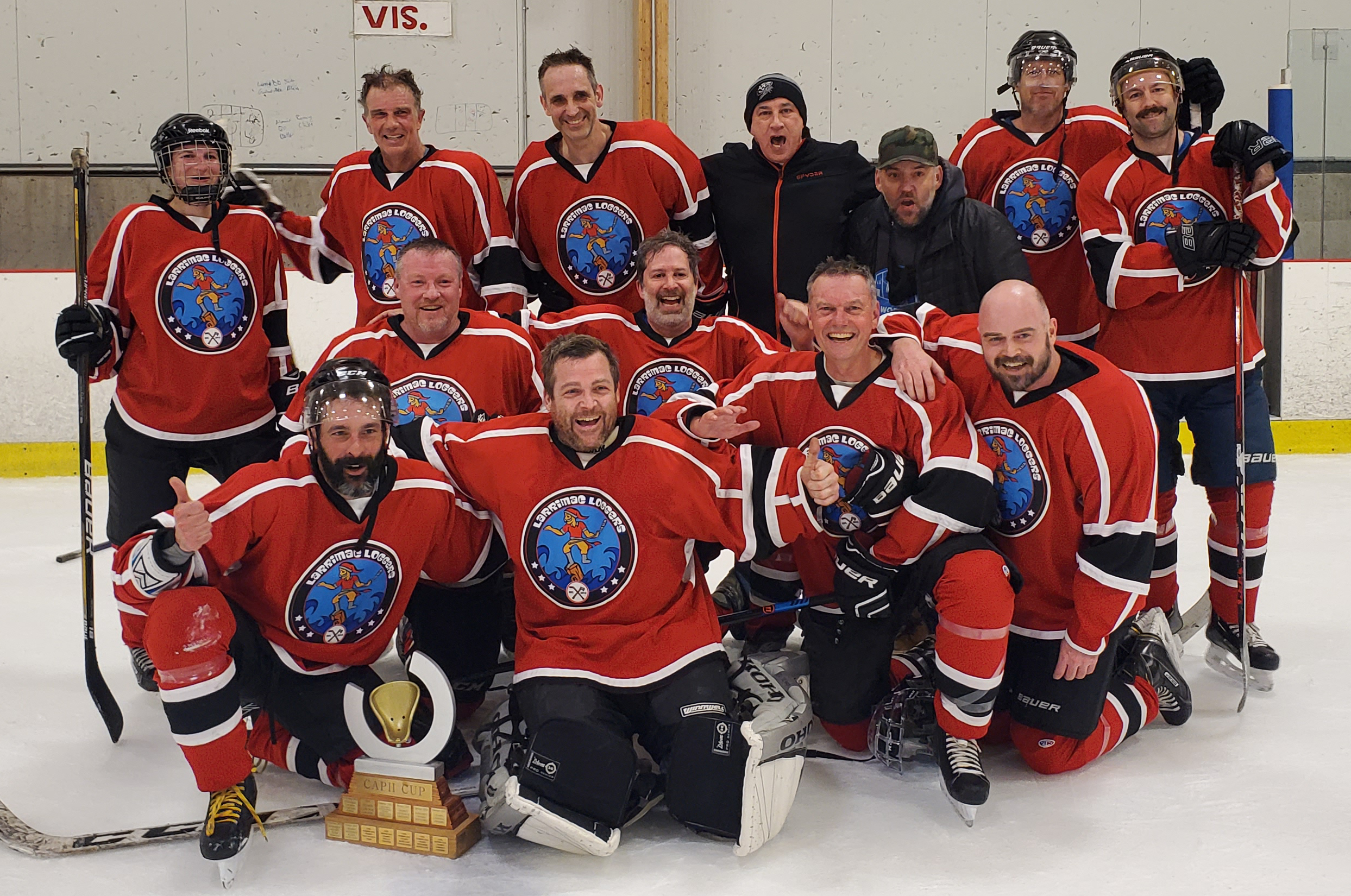
Champions de l’hiver 2021–2022 : les Loggers
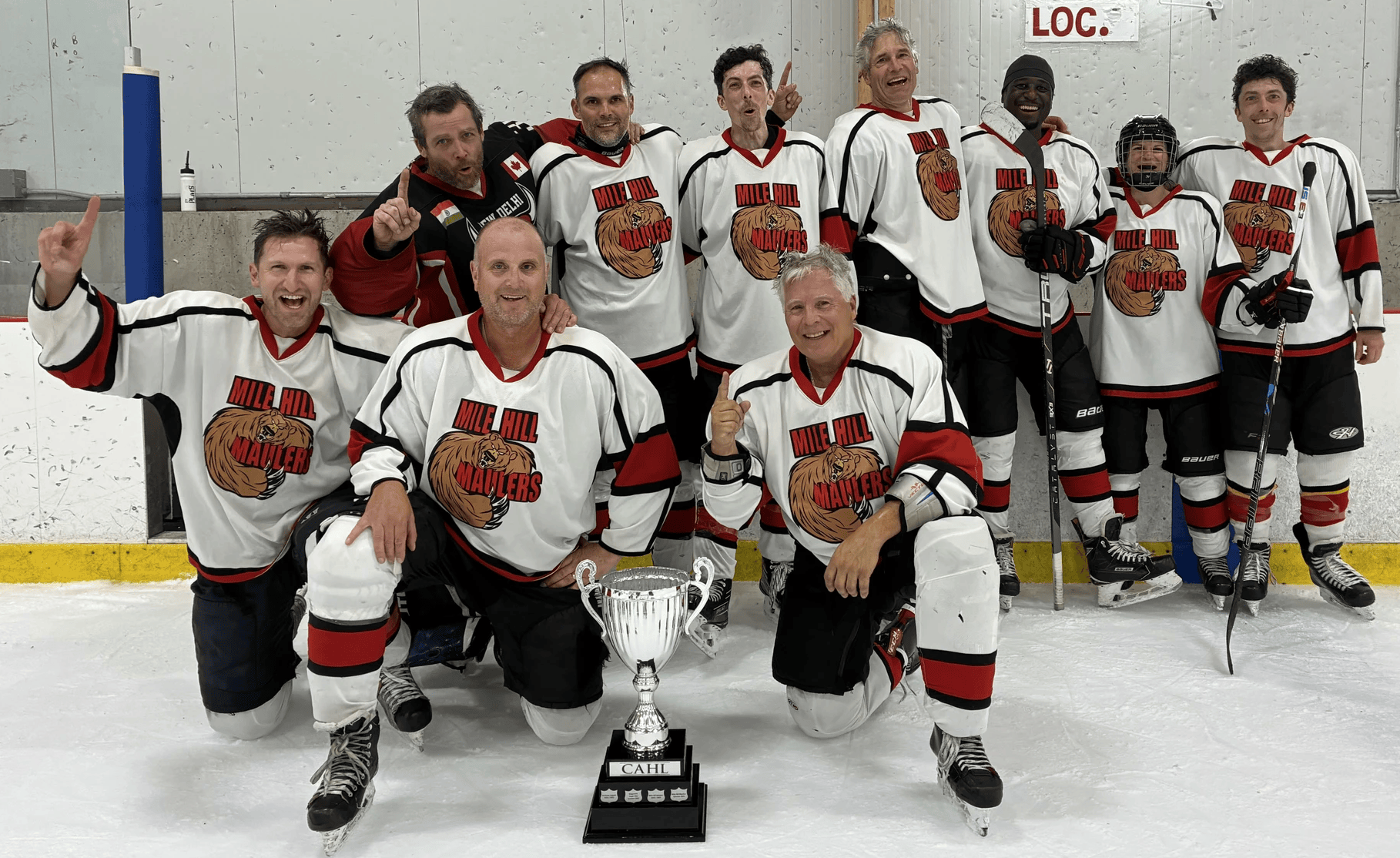
Champions de l’été 2025 : les Maulers

Champions de l’hiver 2025–2026 : les Mineurs
The Lauzier Cup in Hand
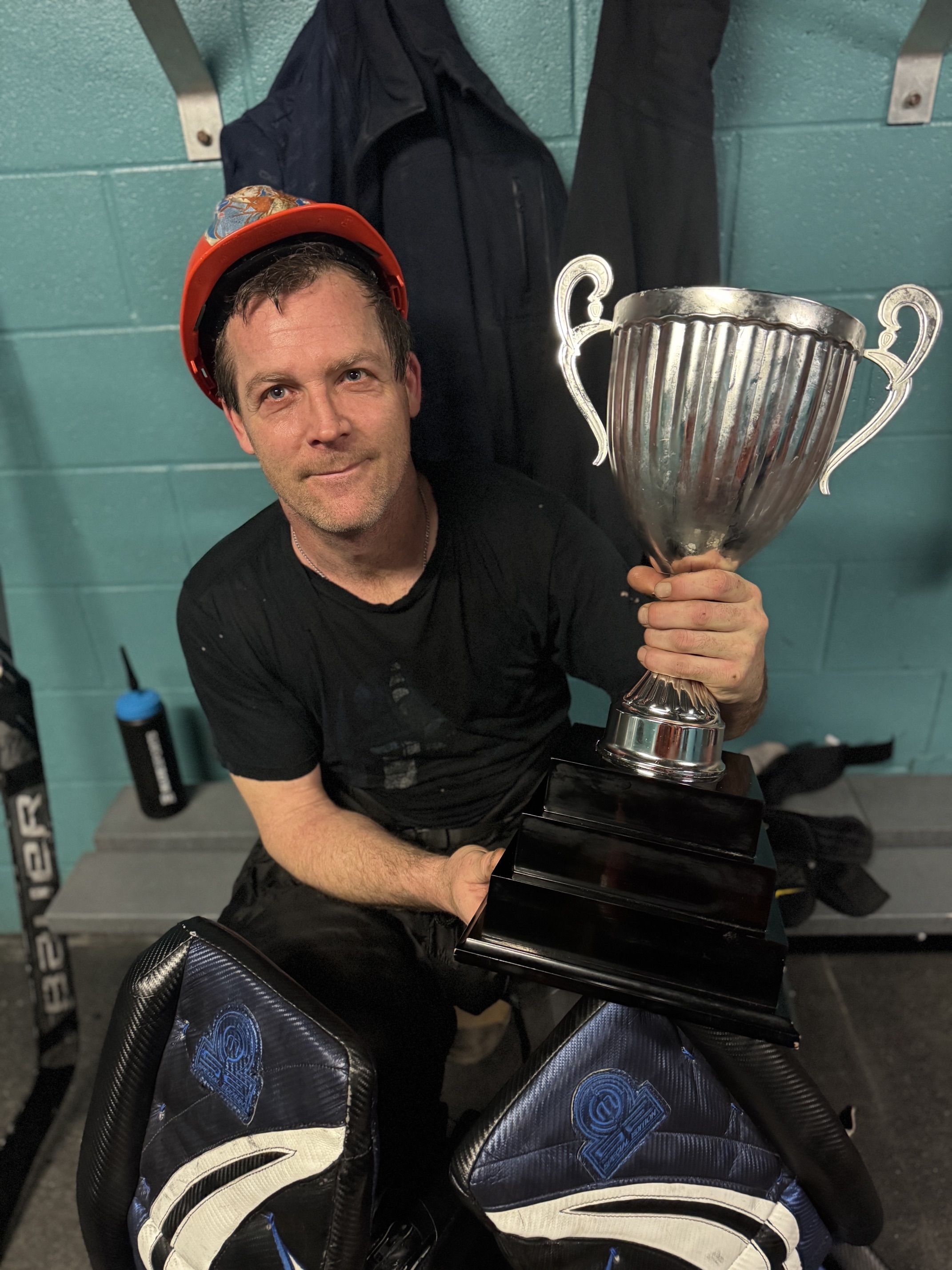
Mark Riley with the Lauzier Cup
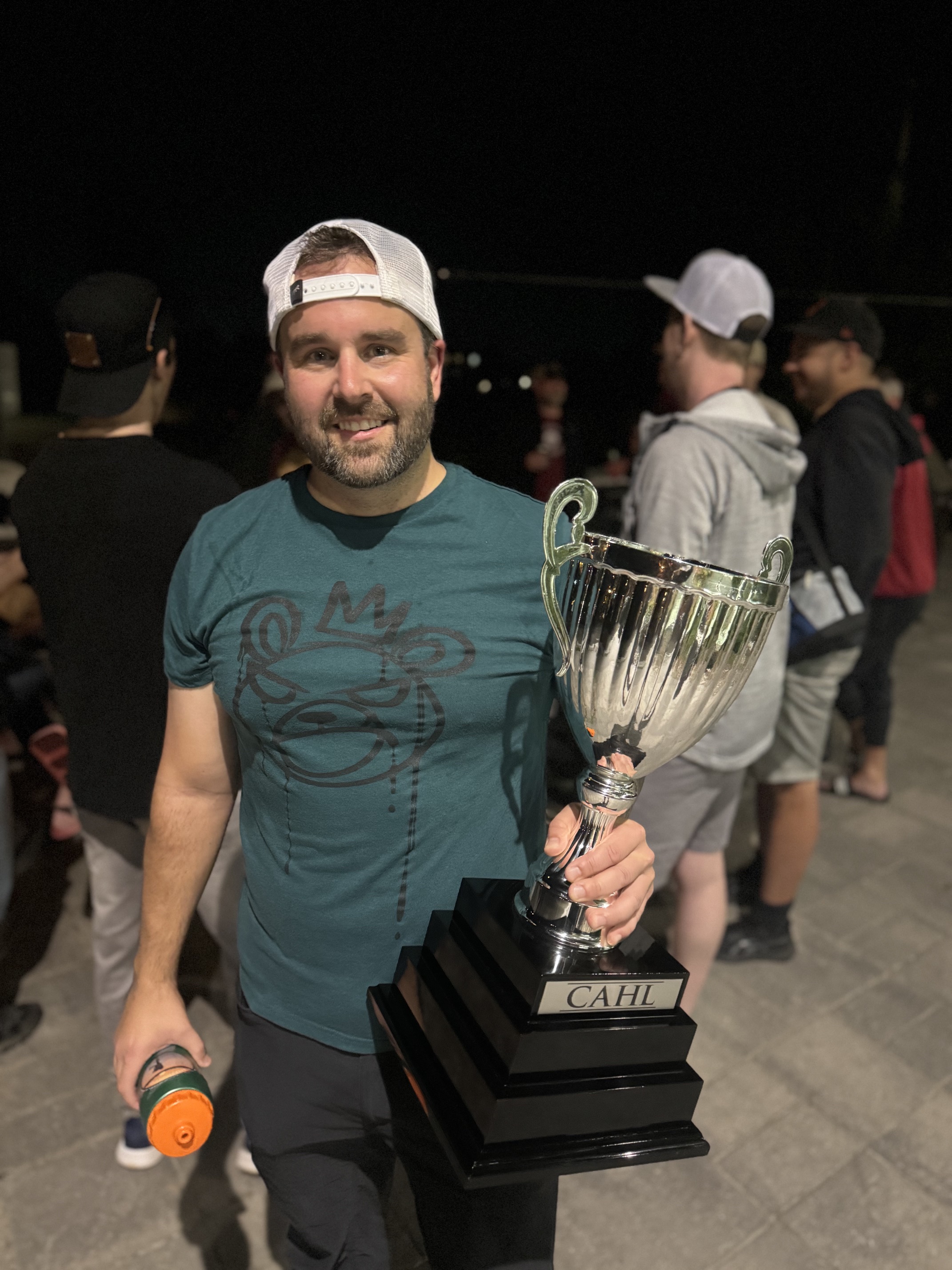
Matt Dingle with the Lauzier Cup
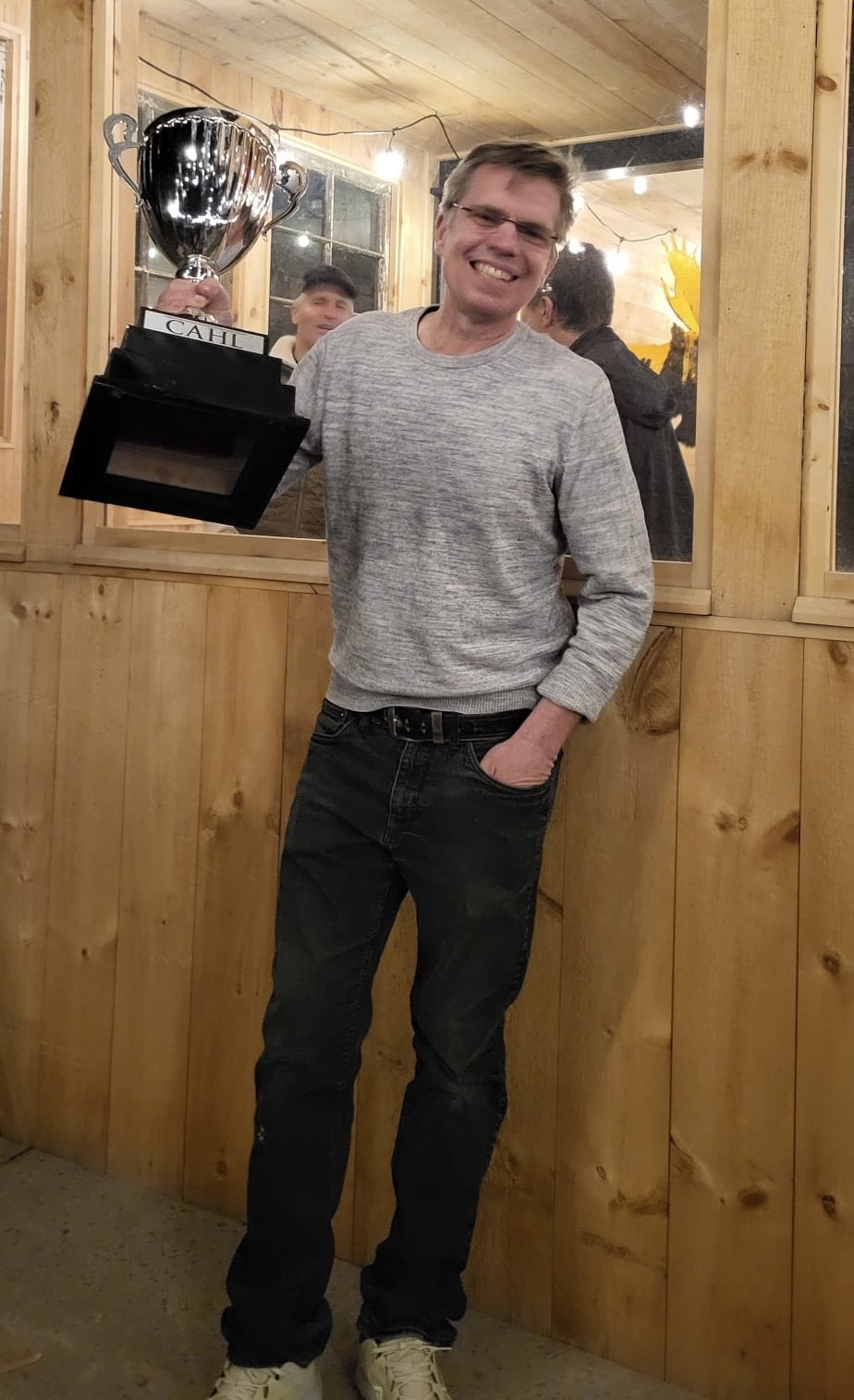
Trevor Merrill with the Lauzier Cup
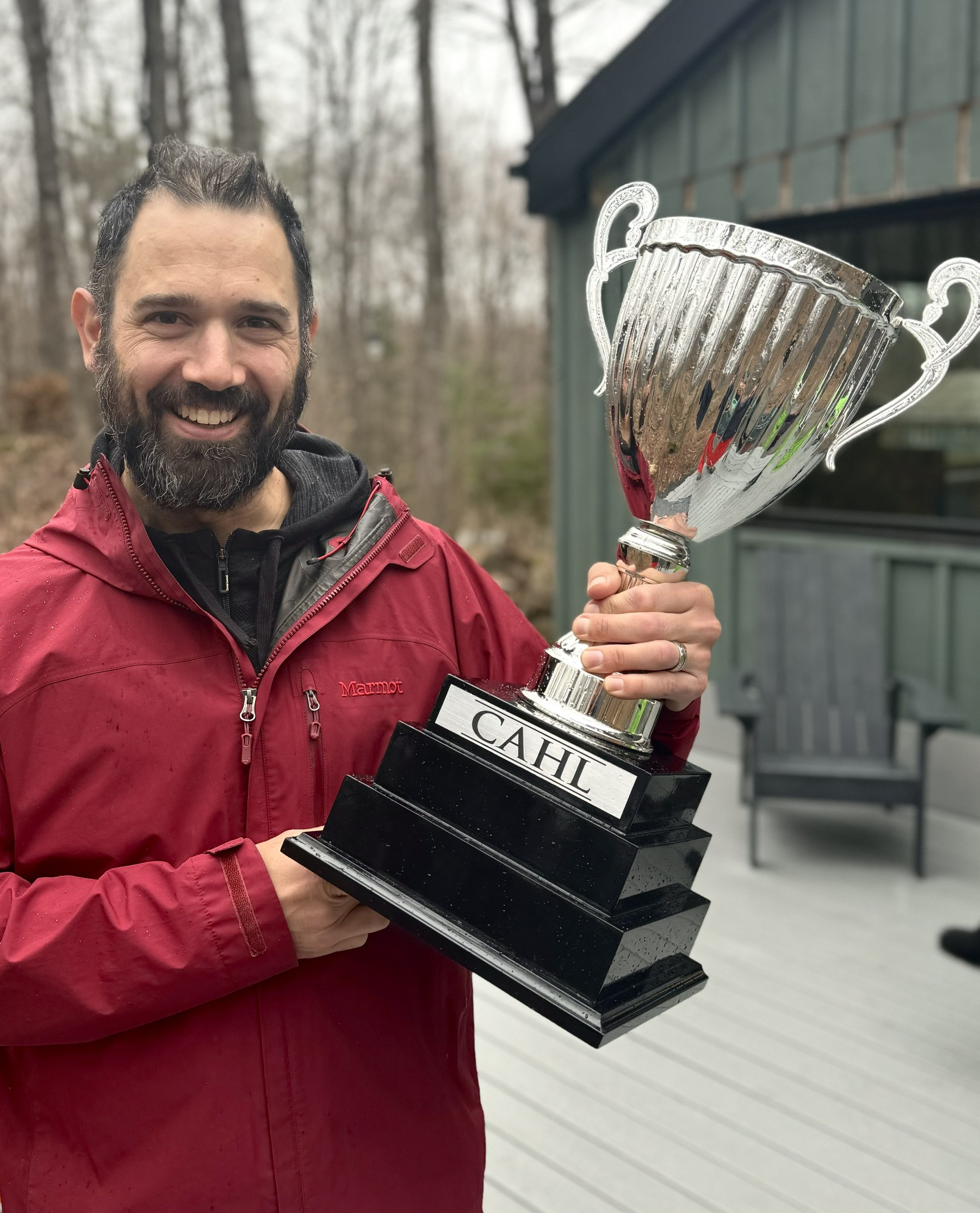
Trevor Pilson with the Lauzier Cup
Tournois et levées de fonds
Au-delà du calendrier régulier, la CAHL a développé ses propres traditions à travers des événements spéciaux, dont le tournoi de golf d’été et le tournoi-bénéfice de Noël. Ce dernier appuie maintenant QUAIL House, un organisme local qui offre un foyer accueillant où des adultes ayant une déficience intellectuelle peuvent vivre dans la dignité, l’indépendance, la joie, et un véritable sentiment d’appartenance à la communauté.
La première édition de la levée de fonds pour le Wakefield Community Emergency Fund a eu lieu en 2025, et nous espérons continuer à amasser des fonds pour des organismes de bienfaisance locaux pendant encore de nombreuses années.
Keeping the Story Alive
The CAHL has always been more than a set of schedules and statistics. It is part of the social history of Chelsea and the surrounding communities of les Collines de l'Outaouais: neighbours playing together, building traditions, arguing over old games, remembering former teammates, and passing stories down to the next group.
What may feel small in the present can become meaningful with time. Ten, twenty, or fifty years from now, these names, photos, and recollections will matter even more than they do now.